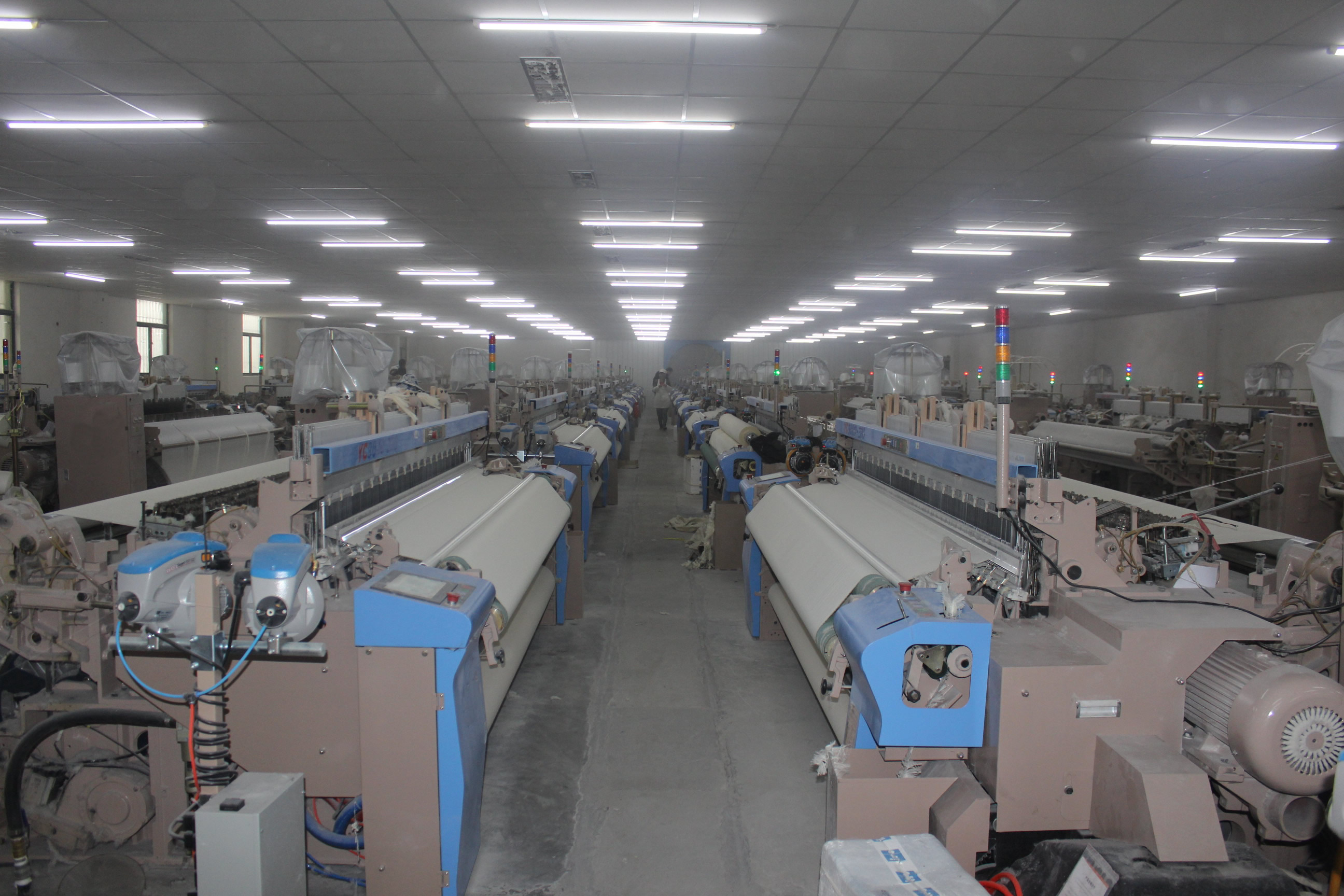
Walk into almost any weaving or knitting unit in India — big or small — and you’ll find the same story repeating itself: production registers maintained by hand, yarn stock counted on WhatsApp photos, and job cards tracked on paper that someone forgot to update three days ago. The industry has scaled in volume and complexity far faster than its systems have.
Having worked closely with several textile manufacturing businesses on ERP implementations, we’ve noticed the same handful of pain points showing up again and again — regardless of whether the unit does plain weaving, jacquard sarees, jumbo rapier fabric, or knitted goods. Here’s a breakdown of those recurring challenges, and how ERPNext (with the right customization) solves them.
1. Yarn and Jari Traceability — The Root of Most Quality Disputes
The single biggest gap in most textile units is the inability to trace a finished piece of fabric back to the exact lot of yarn or jari that went into it. When a customer complaint comes in about color variation or a broken thread pattern, there’s often no way to identify which batch of raw material — or which vendor — caused it.
How ERPNext addresses this:
- Batch/lot-wise tracking built into the Item and Stock Entry framework, extended with shade and lot attributes for yarn and jari
- Beam-wise consumption linking a specific yarn batch to a specific beam, and that beam to specific job cards
- Barcode/QR-based tracking that follows material from GRN through to the finished bundle
Once this traceability chain exists, root-causing a quality issue becomes a five-minute lookup instead of a week of guesswork.
2. Job Card & Production Planning Chaos
Manual production scheduling almost always leads to the same problems: machines sitting idle while orders wait, no visibility into which machine is compatible with which design, and production status updates that reach the planning desk two days too late.
How ERPNext addresses this:
- Custom Job Card workflows built on top of ERPNext’s Manufacturing module, extended to handle both in-house production and job-work (subcontracted) production in a single system
- Machine-wise and shift-wise production dashboards showing planned vs. actual output in real time
- Design-to-machine and feeder-to-yarn mapping so operators know exactly what configuration a job requires, without relying on tribal knowledge
This alone tends to be the single highest-ROI customization for weaving units, because it directly affects delivery commitments.
3. Job Work & Outsourcing Blind Spots
Most weaving and knitting operations rely heavily on job workers — for weaving itself, for butta cutting, for mending, for finishing processes. But very few units have real visibility into what’s sitting with a job worker, how long it’s been there, or how that vendor’s rejection rate compares to another’s.
How ERPNext addresses this:
- Job Work Order and material-issue tracking that ties every unit of yarn, jari, or beam sent out to a specific job card
- Taka-wise receipt recording with meterage, weight, and quantity captured against what was originally issued
- Vendor performance reports comparing job workers on rejection rate, turnaround time, and cost — making the in-house vs. outsource decision a data-backed one instead of a gut call
4. Inventory Visibility Across Multiple Stages
Yarn, jari, consumables, beams, semi-finished (taka) stock, and finished goods — each moves through a different part of the operation, and in most units, each is tracked in a different register or spreadsheet, if it’s tracked at all. The result is a familiar combination: overstocked slow movers sitting in a corner while urgently needed material is out of stock.
How ERPNext addresses this:
- Multi-warehouse and location-wise stock management covering raw material, WIP, and finished goods in one ledger
- Reorder-level alerts and MRP-based purchase suggestions to prevent both overstocking and last-minute shortages
- Stock ageing and slow-moving inventory reports that surface capital sitting idle
5. Quality Control That Actually Feeds Back Into the System
Most units do inspect fabric — but the inspection results rarely make it into a system where they can be analyzed. Defects get noted on a slip of paper, if at all, and there’s no way to spot a pattern (say, a specific job worker or a specific yarn vendor consistently causing the same defect).
How ERPNext addresses this:
- Stage-wise QC — raw material, in-process, and finished goods — with parameterized defect categories (broken end, broken pick, colour variation, design mismatch, etc.)
- QC decisions (accept/reject/rework/hold) tied directly to the batch, so a rejection automatically links back to the responsible vendor or job worker
- Trend reports that turn scattered inspection notes into a genuine quality-improvement tool
6. Machine Maintenance as an Afterthought
Preventive maintenance is almost always reactive in textile units — a machine breaks down, production stops, and only then does someone look at maintenance history (if it exists at all).
How ERPNext addresses this:
- Machine master data with preventive maintenance scheduling
- Breakdown logging with root-cause capture, linked to spare parts consumption
- Machine-wise efficiency reports that identify chronically underperforming equipment before it becomes a bigger problem
7. Dispatch Planning Without Real-Time Order Visibility
On the outbound side, dispatch is often planned manually with little regard for which orders are closest to their promised delivery date, leading to either rushed, poorly consolidated shipments or missed delivery commitments.
How ERPNext addresses this:
- Bundle-wise packing (configurable pack sizes) with barcode/QR generation for every bundle
- Dispatch-readiness alerts tied to promised delivery dates
- Full traceability from bundle to sales order to customer, with dispatch status visible to both the internal team and, optionally, the customer
8. The Bigger Picture: Killing the Data Silos
Individually, each of these gaps is manageable. Together, they create the real problem: production data, inventory data, QC data, and sales data living in separate systems (or no system at all), with no single dashboard giving management a real-time view of the business. Decisions end up being made a week late, based on numbers that were already out of date when they were compiled.
This is really the core value proposition of an ERP for this industry — not any single module, but the fact that sales, design, procurement, production, inventory, QC, and dispatch all pull from and feed into one common database. A sales order confirmation checks real finished-goods stock. A job card allocation checks real yarn availability. A QC rejection automatically reflects in vendor performance scoring. None of this requires anyone to “remember” to update three different registers.
Where to Start
If you’re running a weaving or knitting operation and recognize more than a couple of these problems, the good news is that none of them require reinventing your processes from scratch. ERPNext’s manufacturing, inventory, and quality modules already cover most of the foundation — the real work is in the textile-specific customization: beam and yarn-lot tracking, job-work-specific job cards, feeder-wise design mapping, and taka-level traceability, which is where the true efficiency gains for this industry actually come from.
Getting this right takes ERP implementation experience specific to weaving and knitting workflows — not just generic ERP knowledge. That’s usually the difference between an ERP rollout that gets used every day on the shop floor, and one that quietly falls back into spreadsheets within six months.
Ready to Map This to Your Own Operation?
If you went through this checklist and found more “don’t have it” rows than you’d like, that’s a normal starting point — not a red flag. The right next step is usually a short conversation to understand where your specific bottlenecks are, rather than trying to implement everything at once.
We’ll walk through your current processes, identify which of these gaps are costing you the most, and outline a practical, phased plan to close them.