
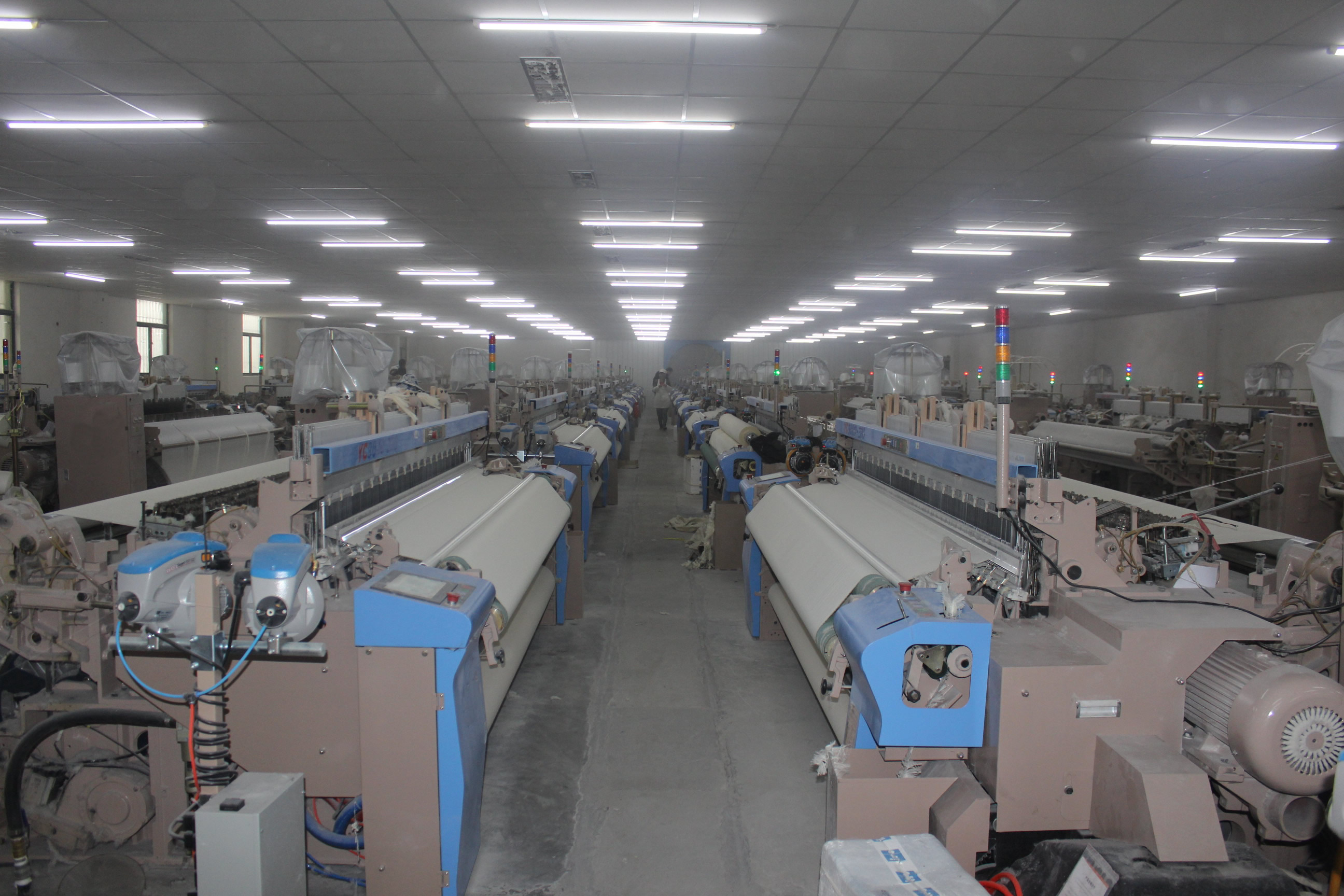
Every textile manufacturer we talk to describes their operational problems in slightly different words — but strip away the phrasing, and the underlying challenges are remarkably consistent across weaving and knitting units. What’s less obvious to most business owners is exactly which part of an ERP system solves which problem. This post is meant to close that gap: a direct, challenge-by-challenge map of the pain points we see most often in this industry, matched against the specific ERPNext functionality (native or customized) that addresses each one.
Think of this as a reference you can hold up against your own operation and ask, “do we have a system doing this, or is this still living in a register?”
1. Yarn, Jari & Raw Material Traceability
| Challenge | ERPNext Feature / Customization |
|---|---|
| Can’t trace a finished piece back to the yarn/jari batch used | Batch/Lot-wise Item tracking, extended with shade & lot attributes on the Item master |
| No visibility into real-time yarn/jari consumption | Stock Entry against Job Card/Work Order with live consumption ledger |
| Root-causing defects is guesswork | Batch traceability chain: GRN → Beam → Job Card → Taka → Finished Bundle |
| Consumables usage not tracked | Consumables mapped as sub-items in BOM, issued and tracked against production orders |
Why it matters: Once every batch carries an identity from purchase to dispatch, a customer complaint about colour variation or thread breakage becomes a lookup, not an investigation.
2. Job Card Management & Production Planning
| Challenge | ERPNext Feature / Customization |
|---|---|
| Manual scheduling causes idle machines | Custom Job Card doctype linked to Machine master, with capacity/availability view |
| No machine-design compatibility check | Design-to-Machine mapping fields on the Job Card, validated at creation |
| Delayed status updates affecting delivery | Real-time Job Card status field (Planned/In-Progress/Completed) visible on a production dashboard |
| No machine-wise performance visibility | Machine-wise Production Report comparing planned vs. actual output |
| No feeder/warp-level configuration tracking | Custom fields for Feeder-wise Design Configuration and Colour/Warp-wise Feeder Allocation on the Job Card |
Why it matters: This is usually the highest-impact customization for a weaving unit — production planning errors compound directly into missed delivery dates.
3. Job Work / Outsourcing Management
| Challenge | ERPNext Feature / Customization |
|---|---|
| No tracking of material sent to job workers | Job Work Order with Material Issue against Job Card, using ERPNext’s Subcontracting framework as the base |
| No batch-level QC before accepting job-work goods | Taka-wise QC Inspection linked to the originating Job Work Order |
| No visibility into vendor delivery performance | Job Worker Performance Report — turnaround time, rejection %, cost |
| Hard to compare in-house vs. outsourced cost | Job Work Costing (per meter/piece/process) compared against internal production cost report |
| Shortage/excess/damage on receipt goes unrecorded | Taka Receipt entry with Meterage/Weight/Quantity reconciled against the issued Job Card |
Why it matters: Most weaving businesses run a hybrid of in-house and job-work production. Without this mapping, it’s structurally impossible to know which is actually more profitable.
4. Inventory & Warehouse Visibility
| Challenge | ERPNext Feature / Customization |
|---|---|
| Inaccurate stock across yarn, jari, beams, FG | Multi-warehouse Stock Ledger with Location/Rack/Bin-level tracking |
| No real-time low-stock alerts | Reorder Level / Safety Stock triggers with automated notifications |
| Overstocking slow movers, shortage on urgent items | Stock Ageing Report + Auto Purchase Suggestion based on Material Requirement Planning (MRP) |
| Semi-finished (taka) stock untracked | Custom Taka Inventory doctype tracking WIP between weaving and finishing stages |
| No batch/lot traceability across stock movement | Serial/Batch tracking applied uniformly across Stock Entry, Delivery Note, and Purchase Receipt |
Why it matters: Inventory visibility gaps are usually where working capital quietly leaks — either tied up in dead stock or wasted expediting urgent shortages.
5. Quality Control
| Challenge | ERPNext Feature / Customization |
|---|---|
| QC checks inconsistent, not parameterized | QC Parameter Master configured per process stage (raw material / in-process / finished goods) |
| Limited visibility into recurring defects | Defect Categorization (broken end, broken pick, colour variation, design mismatch, etc.) as a structured field, not free text |
| Manual defect recording blocks trend analysis | QC Inspection linked to Batch + Job Worker + Vendor, feeding a Rejection Analysis Report |
| No link between QC data and vendor performance | Vendor Quality Performance Report cross-referencing raw material QC results against Purchase Order/vendor |
| No accept/reject/rework workflow | QC Decision Workflow (Accept / Reject / Rework / Hold) with automatic rejected-stock segregation |
Why it matters: Quality data only becomes useful once it’s structured enough to aggregate. A pile of handwritten inspection slips can’t tell you that one job worker accounts for 40% of your rejections — a properly tagged QC record can.
6. Machine Maintenance
| Challenge | ERPNext Feature / Customization |
|---|---|
| No preventive maintenance scheduling | Machine Master with Preventive Maintenance Schedule and auto-generated maintenance tasks |
| Breakdowns and root causes not logged | Breakdown Maintenance record linked to Machine, with root-cause capture |
| Spare parts issue against machines untracked | Spare Parts Inventory linked to Maintenance Task, with issue tracking |
| No machine-wise efficiency visibility | Machine-wise Efficiency Report combining production output against downtime hours |
Why it matters: Unplanned downtime on a jumbo rapier or jacquard machine doesn’t just cost repair time — it cascades into missed job card deadlines and idle job workers waiting on beams.
7. Dispatch & Logistics
| Challenge | ERPNext Feature / Customization |
|---|---|
| Manual dispatch planning misses optimal loads | Dispatch Planning against Sales Order with FG allocation view |
| No bundle-level traceability | Bundle Number generation with configurable pack size (10/15/20), each bundle carrying a Barcode/QR |
| No real-time order tracking for customers | Dispatch Status field (Planned/Packed/Dispatched/Delivered) exposed via customer portal or WhatsApp/Email notification |
| No dispatch-readiness alerts | Automated alerts when an order nears its promised delivery date without a dispatch plan |
| Return/delivery failure handling is ad hoc | Dispatch Return workflow linked back to the original Sales Order and Bundle |
Why it matters: Bundle-to-barcode-to-dispatch traceability is what makes it possible to answer “where is this specific order” in seconds rather than by calling the warehouse.
8. Breaking the Data Silos
| Challenge | ERPNext Feature / Customization |
|---|---|
| Sales, production, inventory, QC in separate systems | Single common database — every module (CRM, Production, Inventory, QC, Dispatch, Finance) reads/writes to the same records |
| Delayed management reporting | Real-time KPI Dashboard (sales, production, dispatch, inventory, receivables) |
| No consolidated view for decision-making | Role-based dashboards — Directors see business-wide KPIs, department heads see functional detail |
Why it matters: This is the actual value of “ERP” as a category, distinct from any single module — a sales order confirmation can check real finished-goods stock, a job card allocation can check real yarn availability, and a QC rejection can automatically update vendor scoring, all without manual reconciliation between systems.
Using This as a Self-Assessment
If you want a quick way to use this table: go section by section and mark each row as “Have it,” “Have it but not used properly,” or “Don’t have it.” In our experience, most units score reasonably well on Finance and CRM (because accounting software forces some discipline there) and poorly on Job Work Management, Machine Maintenance, and QC — precisely because those are the areas without an off-the-shelf tool forcing structure, and the ones most often still running on paper or WhatsApp.
The gap between “have it” rows and “don’t have it” rows is, in effect, your ERP scope. And in nearly every weaving or knitting implementation we’ve been part of, the textile-specific customizations — beam/yarn-lot tracking, feeder-wise design mapping, taka-level traceability, and job-work costing — end up mattering far more than any generic ERP feature, simply because they map directly onto how this industry actually works on the shop floor.
Ready to Map This to Your Own Operation?
If you went through this checklist and found more “don’t have it” rows than you’d like, that’s a normal starting point — not a red flag. The right next step is usually a short conversation to understand where your specific bottlenecks are, rather than trying to implement everything at once.
We’ll walk through your current processes, identify which of these gaps are costing you the most, and outline a practical, phased plan to close them.