Despite accelerating tensions—triggered by steep tariffs, trade imbalance concerns, and India’s ongoing purchase of Russian oil—the United States has reaffirmed a willingness to keep communication channels open. Through the State Department, Washington emphasized that India remains a strategic partner and assured the public that discussions will continue in a “full and frank” manner.
The Current Rift: Tariff Hike and Oil Tensions
- The U.S. administration, pointing to India’s Russian oil purchase and a widening trade deficit, has slapped a substantial 50% tariff on Indian goods.
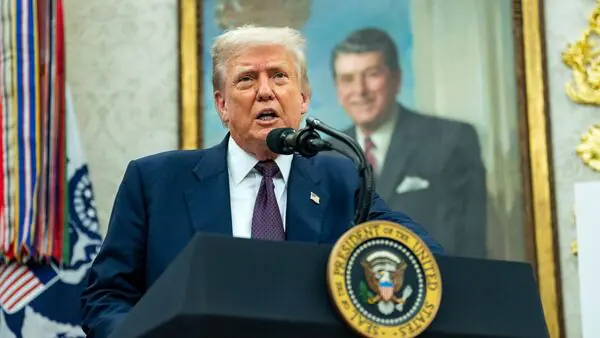
- President Trump has halted further trade negotiations, declaring that “no talks” will occur until these core issues—occasions largely rooted in foreign policy and economic strategy—are resolved.
The State Department’s Diplomatic Tone
- Despite the aggressive economic stance, a nuanced counterpoint comes from the State Department. In a public briefing, Principal Deputy Spokesperson Tommy Pigott stated: “India is a strategic partner with whom we engage in a full and frank dialogue. That will continue.”
- This explicit commitment underscores a broader U.S. goal: maintaining strategic ties while managing critical disagreements through direct and constructive conversation.
Why This Matters
| Focus Area | Implications |
|---|---|
| Strategic Stability | Reinforces diplomatic ties despite policy divergence due to geopolitical realities. |
| Market Clarity | Companies and investors can expect ongoing engagement, reducing fears of total decoupling. |
| India’s Diplomatic Leverage | India retains a platform for negotiating or alleviating economic pressures without giving up strategic footing. |
- The dialogue offers an important recognition of India’s autonomy and global significance—especially as India deepens ties with BRICS partners like Russia, Brazil, and China.
- It also signals that the U.S. sees value in preserving communication rather than letting tensions spiral into full-blown economic estrangement.
Final Thoughts
The U.S.’s dual posture—clamping down with strong economic actions while assuring diplomatic continuity—embodies the complexity of modern alliances. It reveals that even amid bargaining and friction, long-term relationships matter. Open, candid talks may provide a path to navigating this impasse without sacrificing strategic trust.